Why Soil Health Is Becoming: In recent years, one topic has started gaining serious attention in Indian agriculture, soil health. While farmers have always understood the importance of fertile land, modern agricultural challenges have made soil management more critical than ever before.
Today, improving soil health is not just about increasing yield. It is about sustainability, cost control, and long-term farm productivity.
What Is Soil Health?
Soil health refers to the condition of the soil in terms of its ability to support crop growth. Healthy soil contains balanced nutrients, good organic matter, proper moisture retention, and active microorganisms.
When soil is healthy, crops grow better, require fewer chemical corrections, and are more resistant to pests and diseases. On the other hand, poor soil health can lead to low productivity, higher fertilizer costs, and declining farm income over time.
Why Soil Health Is a Growing Concern
Over the past few decades, intensive farming practices have increased production but also put pressure on soil quality. Continuous cropping, excessive chemical fertilizer use, and reduced organic matter have affected soil balance in many regions.
Some common issues farmers are facing in few years:
- Nutrient imbalance
- Declining organic carbon levels
- Soil erosion
- Reduced water retention capacity
These problems do not appear suddenly. They develop gradually, which makes them harder to notice until productivity begins to fall.
Government Focus on Soil Testing
To address this issue, soil testing initiatives have expanded across India. Soil Health Card programs encourage farmers to test their soil regularly and understand nutrient deficiencies before applying fertilizers.
Soil testing helps farmers:
- Apply the right nutrients in the right quantity
- Reduce unnecessary fertilizer expenses
- Prevent overuse of chemicals
- Improve long-term soil fertility
Balanced fertilizer use not only protects soil but also reduces environmental impact.
The Role of Organic Matter
Organic matter plays a key role in maintaining soil health. Adding compost, crop residue, green manure, or organic inputs can improve soil structure and increase microbial activity.
Also Read this Article: Carbon Credits in Agriculture…
Healthy microbial activity supports nutrient breakdown, making it easier for crops to absorb essential elements. It also improves moisture retention, which is especially important in regions facing irregular rainfall.
Many agricultural experts now recommend integrating organic practices with conventional farming methods to maintain balance.
Climate Change and Soil Health
Changing weather patterns are also affecting soil conditions. Irregular rainfall, extreme heat, and water stress can damage soil structure and increase erosion risks.
Healthy soil acts as a buffer during climate stress. It retains moisture during dry spells and drains excess water during heavy rainfall. This resilience makes soil management even more important in today’s climate conditions.
How Farmers Can Improve Soil Health
Improving soil health does not always require major investment. Small steps can make a significant difference over time:
- Regular soil testing
- Balanced fertilizer application
- Crop rotation
- Avoiding excessive chemical input
- Adding organic matter
- Proper irrigation management
Long-term productivity depends on consistent soil care rather than short-term corrections.
Why This Topic Matters Today
As India continues to focus on agricultural growth and farmer income improvement, soil health remains a foundational factor. Higher yields are not sustainable without maintaining soil quality.
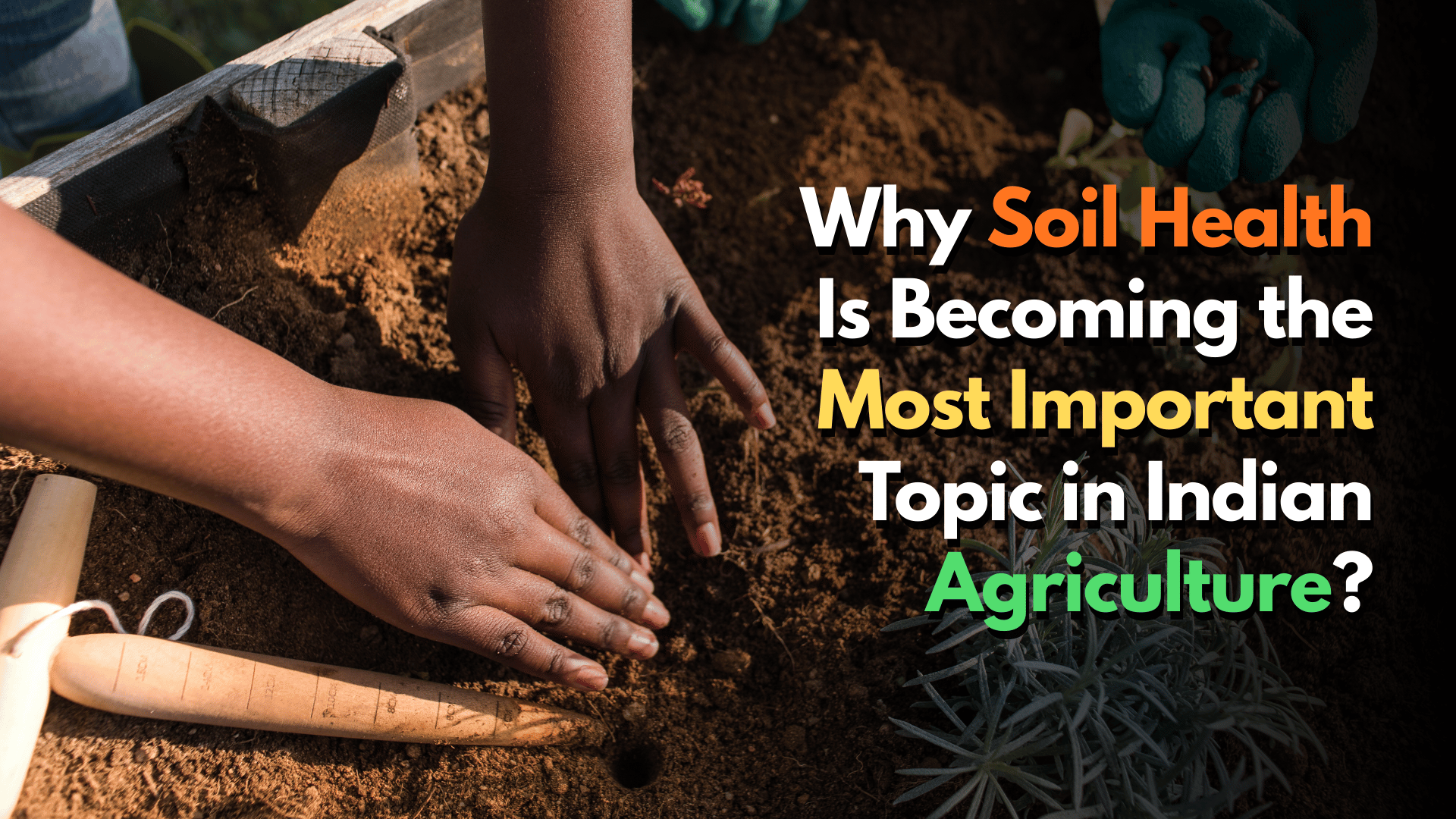
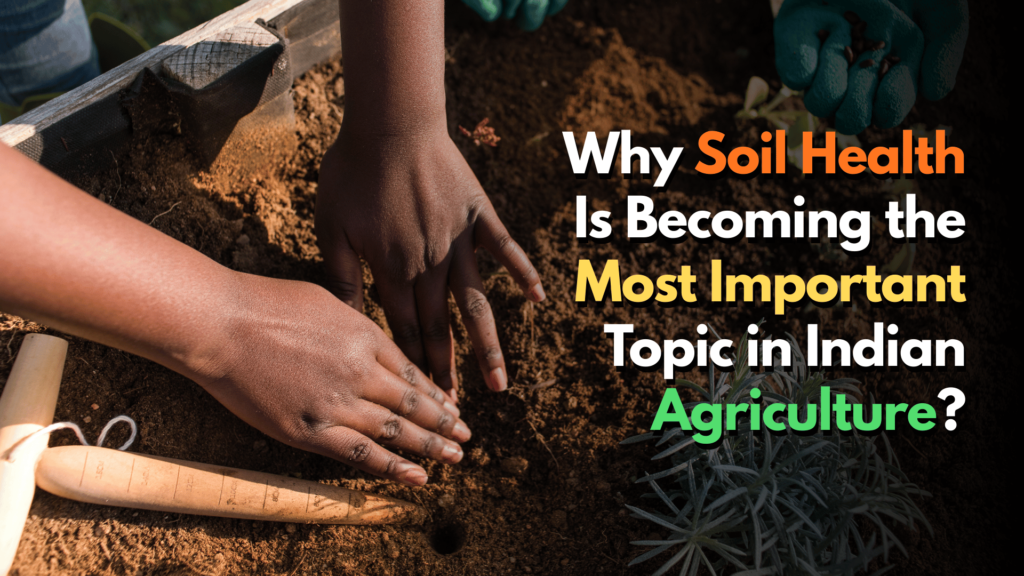
Why Soil Health Is Becoming the Most Important Topic in Indian Agriculture
Digital agriculture platforms, including rupiya.app, are part of a broader shift toward structured access to agricultural information and inputs. However, the responsibility of soil management ultimately lies in daily farming practices and informed decision-making.
Understanding soil health is not just a scientific discussion, it directly affects income, crop quality, and farm sustainability.
Conclusion
Soil is more than just land; it is the foundation of agriculture. Protecting and improving soil health ensures that farming remains productive for future generations.
By focusing on balanced nutrition, organic matter, and regular testing, farmers can build resilience against both economic and climate challenges. In the long run, healthy soil leads to healthier crops, more stable yields, and sustainable agriculture.
What is soil health in agriculture?
Soil health refers to the condition of the soil and its ability to support healthy crop growth while maintaining nutrient balance and proper structure.
Why is soil health is important for farmers?
Healthy soil improves crop yield, reduces input costs, and supports long-term farm productivity.
What are the signs of poor soil health?
Low crop yield, hard soil texture, waterlogging, nutrient deficiencies, and increased pest problems can indicate poor soil health.
What does soil testing help farmers?
Soil testing identifies nutrient deficiencies and helps farmers apply the correct type and amount of fertilizer.
How often should soil testing be done?
Experts generally recommend soil testing every 2–3 years, depending on crop type and farming practices.
What causes soil nutrient imbalance
Continuous cropping, excessive chemical fertilizer use, and lack of organic matter can lead to nutrient imbalance.
How does organic matter improve soil health?
Organic matter improves soil structure, increases moisture retention, and supports beneficial microorganisms.
Can crop rotation improve soil quality?
Yes, crop rotation helps restore nutrients, reduce pest cycles, and maintain soil fertility.
How does climate change affect soil health?
Irregular rainfall, droughts, and extreme heat can increase soil erosion and reduce moisture retention.
What are simple steps farmers can take to improve soil health?
Regular soil testing, balanced fertilizer use, adding organic matter, crop rotation, and proper irrigation management can improve soil quality over time.